 How to Start an Online Store With No Money
 How Small Businesses Can Use AI for Marketing
 What Is the Metaverse in 2026? Still Relevant?
 The Rise of Foldable Laptops: Gimmick or Future?
 What Is DeFi? Decentralized Finance Explained Simply
Foldable Phones Smart Glasses: The Gadgets Shaping Next Year
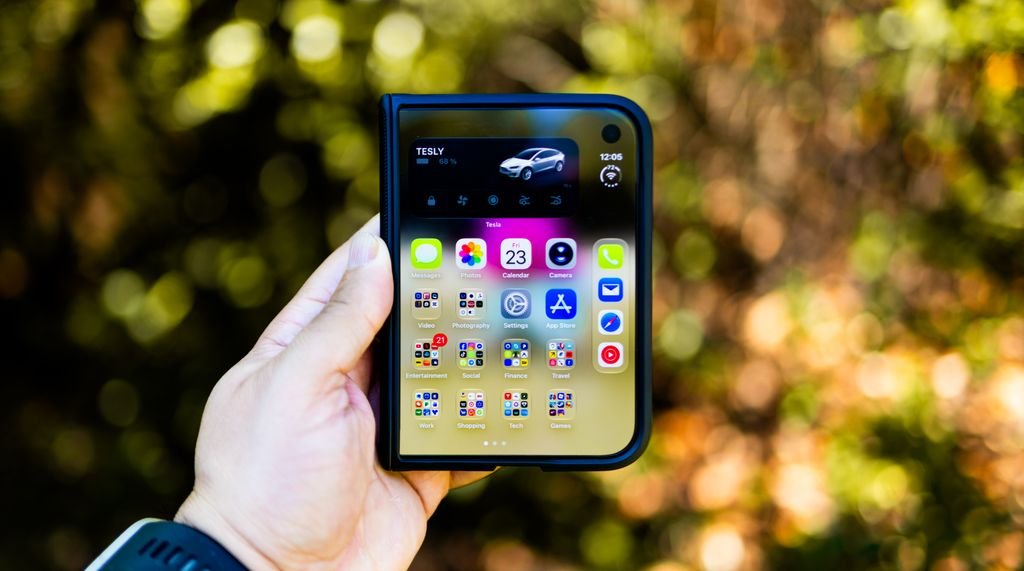
Foldable phones smart glasses are the two gadgets getting the most attention in the technology world right now: phones that fold in half and glasses that show information in front of your eyes. Both are moving from novelty to something people can actually use every day, and both are expected to improve quickly over the next year.
Foldable phones are the easier idea to understand. They work like a normal phone when closed, then open up into a small tablet for reading, watching video or working on documents. The larger screen makes a real difference for people who do a lot on their phone, and the newest models are thinner and lighter than the early versions.
Smart glasses are a bigger change in habit. Instead of looking down at a screen, the wearer sees directions, messages and translations in their field of view. Early models are simple, mostly used for photos, audio and basic notifications, but the technology is heading towards something closer to a computer you wear on your face.
What connects the two trends is a simple idea: screens are no longer fixed to one size or one place. A phone can grow when you need it, and information can appear where you are looking, rather than on a device in your hand. For readers, travellers and people who work on the move, that flexibility is the main attraction.
There are still reasons to wait. Foldable screens need careful handling, and repairs can be costly. Smart glasses depend heavily on the software behind them, and the most useful features often require a phone nearby. As with any new category, the first version you buy is rarely the best version.
Even so, sales are rising, and more companies are entering the market. Competition usually brings prices down and quality up, and that pattern looks likely to repeat here. App makers are also starting to design for larger folding screens and for glasses, which should make both types of device more useful over time.
For shoppers thinking about an upgrade, the advice is the same as with any gadget: try it in a store first, check the warranty, and make sure it fits the way you actually live and work. The technology is exciting, but the best gadget is the one you will enjoy using every day.
Foldable Phones in More Detail
There are two main kinds of foldable phone. Book-style models open like a small book into a tablet-sized screen, which suits reading, video and split-screen work, and the Galaxy Z Fold is the best-known example. Flip-style models fold in half the other way, so a normal phone becomes a compact square that fits a small pocket, and the outside screen shows the time, notifications and a camera preview. Both use a flexible display with a hinge, and that hinge is the part to think about most: it is the reason these phones feel different, and the reason repairs can be expensive. Battery life has improved, but a larger screen still uses more power, so a foldable used as a tablet all day will need charging sooner than a standard phone. For people who read, edit documents or watch video on their phone, the extra screen is worth it; for people who mainly call and message, it may not be.
Smart Glasses in More Detail
Smart glasses come in two broad types as well. The simplest look like ordinary sunglasses with speakers and a camera built in: you listen to music, take a photo or hear a message without taking your phone out, and Meta’s Ray-Ban smart glasses are the best-known example. The more advanced models add a small display in the lens, so directions, translations or captions appear in front of you. An AI assistant is usually part of the package, answering questions or describing what the camera sees. The trade-offs are battery life, which is still measured in hours rather than days, and privacy: people around you cannot always tell when a camera is recording, so makers have added a small light that shows when it is on. For now, the simple models are the safer buy for most people, while display glasses are still improving fast.
Foldable Phones Smart Glasses: How to Choose Between Them
Foldable phones smart glasses may sound like two separate stories, but shoppers compare them together because both ask the same question: how much screen do you really need, and where should it sit? A foldable gives you more screen when you want it and a normal phone when you do not. Glasses give you less screen, but in a place that leaves your hands free. If you are not sure about wearables at all, a cheaper first step is worth considering: our guide to the best wireless earbuds under $50 shows how much you can get without spending much, and our look at whether smart rings are worth it covers another wearable that lives on your body all day. A foldable phone can also act as your wallet, since most support tap-to-pay, which is one more reason digital wallets replacing cash matters when you choose a phone.
What to Check Before You Buy
Before you spend, check four things. First, the warranty and the cost of a screen repair, because a foldable screen costs far more to fix than a standard one. Second, how long the maker promises software updates, since a gadget that stops getting updates becomes less useful quickly. Third, the return policy, because a foldable or a pair of glasses needs a few days of real use before you know whether it suits you. Fourth, comfort: try a foldable in one hand and glasses on your face for more than a minute, because a device that is annoying to hold or wear will stay in a drawer.
Frequently Asked Questions
Are foldable phones durable enough for everyday use? The newest models are much tougher than the first ones, with stronger hinges and better water resistance, but they still need more care than a standard phone. A case, a screen protector made for the model, and a careful pocket habit make a real difference.
Do smart glasses need a phone to work? Most do, at least for now. The glasses handle the camera, speakers and display, while the phone provides the internet connection, the apps and the processing power. Some newer models are becoming more independent, but a phone nearby is still the normal setup.
Are foldable phones worth the extra price? It depends on how you use your phone. If you read, watch video or work on documents on it every day, the larger screen can be worth the premium. If you mainly call, message and take photos, a good standard phone will do the same job for less.
Will smart glasses replace phones? Not in the near future. Glasses are good for quick information, such as directions or a short message, but typing, long reading and most apps still work better on a phone. The more likely future is that the two work together, with glasses handling the quick glance and the phone handling the rest.





2 thoughts on “Foldable Phones Smart Glasses: The Gadgets Shaping Next Year”
Comments are closed.