 How to Start an Online Store With No Money
 How Small Businesses Can Use AI for Marketing
 What Is the Metaverse in 2026? Still Relevant?
 The Rise of Foldable Laptops: Gimmick or Future?
 What Is DeFi? Decentralized Finance Explained Simply
What Is the Metaverse in 2026? Still Relevant?
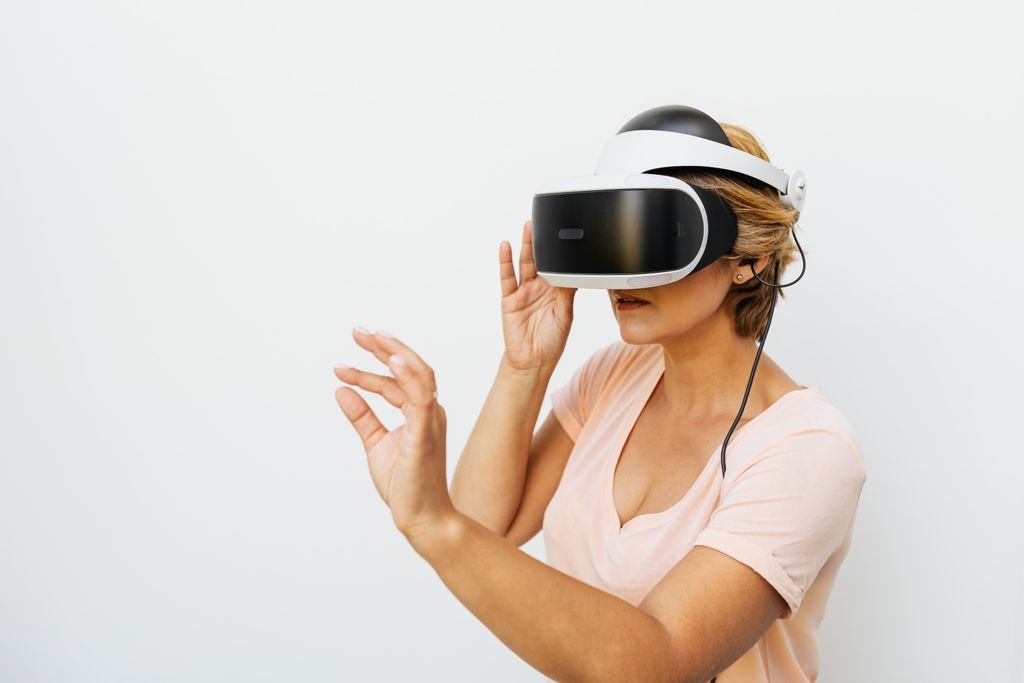
A few years ago, the metaverse was everywhere. Tech companies talked about it, billions poured in, and it felt like we would all soon live half our lives inside virtual worlds. Then the excitement faded and people started asking: what is the metaverse, and is it still relevant in 2026? The short answer is yes — but not as most people expected. It did not become one giant virtual world — it split into smaller, practical pieces millions already use every day.
What Is the Metaverse, in Simple Words?
The metaverse is a set of persistent, three-dimensional online spaces where people meet, play, work, learn and create through a digital avatar. Unlike a normal website, a metaverse space keeps existing even when you log out — your avatar, items and progress stay there, waiting for you to return.
Think of it less as one place and more as a direction the internet is heading: the old internet was mostly flat pages and apps you scrolled through. The metaverse adds depth: you step inside a space instead of looking at it — a virtual shop, a digital classroom, a concert with friends abroad — on a headset, phone, laptop or console.
Why Everyone Thought the Metaverse Was Dead
The idea lost its shine for three reasons. First, the original promise was too big. In 2021, Meta said it would build a single connected virtual world and spent tens of billions trying. The headsets were heavy and expensive, the graphics looked basic, and most people never came back. In January 2026, Meta cut around 10 percent of its Reality Labs team and closed several VR studios, shifting attention toward AI and smart glasses.
Second, the virtual land boom collapsed. During the crypto craze, people paid huge sums for plots of digital land. Prices crashed, and the whole idea started to look like a bubble. Third, AI stole the spotlight. Chatbots solved problems people had right now, while the metaverse still felt like a promise about the future.
Where the Metaverse Is Actually Alive in 2026
The hype died, but the useful parts kept growing. Gaming is the biggest one. Roblox, where users build and play millions of 3D worlds, reported more than 111 million daily active users in mid-2025, climbing into 2026. Its creators earned over $1.5 billion in 2025 — a real economy, not just a game. Fortnite followed a similar path, turning from a shooting game into a place for concerts and player-built worlds.
Industry is the second big area. Manufacturers now build “digital twins” — exact virtual copies of real factories — before they build anything in the real world. Engineers test production lines and train workers inside the virtual copy, saving time and money. NVIDIA’s Omniverse platform has become a common tool for this, and most large firms increased their industrial metaverse spending in 2024. See how NVIDIA Omniverse works on NVIDIA’s official website.
Work and learning are the third area. Companies use virtual rooms for training that is hard or dangerous in real life, such as emergency procedures or operating heavy machinery. These experiences depend on fast, nearby computing power, which is why edge computing matters so much for virtual worlds: data must be processed close to the user, or the experience feels slow and laggy. Our simple guide to edge computing explains how it works.
Do You Need a VR Headset?
No — and this is the part most people get wrong. A good VR headset, such as the Meta Quest 3, makes the experience more immersive, but it is not required. Roblox, Fortnite, VRChat and Rec Room all run on phones and laptops. See the current headset range on the official Meta Quest website. Headsets are getting lighter and cheaper, but some people still feel sick after twenty minutes inside VR. Until headsets are as easy to wear as glasses, most people will use the screens they already own.
How AI Changed the Metaverse
The same AI boom that pushed the metaverse out of the headlines is now quietly rebuilding it. Building a 3D world used to take a team of artists months. Today, AI tools can generate landscapes, buildings and characters from a simple text description in minutes, so small creators can build worlds that once needed a whole studio. AI agents — software that works on its own — are starting to appear inside virtual spaces as shop assistants and tutors. Our article on AI agents in 2026 explains how these tools work.
The Problems Nobody Should Ignore
Privacy is a real concern: a headset tracks where you look and how you move — far more personal than a browsing history. Safety is another issue, especially for children, because virtual worlds can be hard for parents to monitor. Scams are common too — fake land sales and fake giveaways have cost people real money. There is also the question of ownership: if you buy a virtual jacket in one game, you usually cannot wear it in another. Standards groups are working on this with shared formats such as OpenUSD and OpenXR. That kind of cross-world ownership is tied to blockchain — our beginner’s guide explains how it works.
How to Try the Metaverse Today (for Free)
You do not need to spend any money to see what the fuss is about. Download Roblox or Fortnite on your phone or laptop and join a popular world or event with friends. Spend an hour in a busy virtual world and build something small — but set a time limit, and never spend real money on virtual items until you understand exactly what you are buying.
So, Is the Metaverse Still Relevant in 2026?
Yes — but in a more honest way than the 2021 hype promised. There is no single metaverse, and there probably never will be. Instead, there are game worlds with hundreds of millions of users, factories running on digital twins, classrooms and training rooms in 3D, and creators earning real money from virtual spaces. The metaverse in 2026 is not about escaping real life — it adds a new layer to it.
FAQ
What is the metaverse in simple words?
A set of persistent 3D online spaces where people meet, play, work and create through avatars — many platforms, from games like Roblox and Fortnite to virtual training rooms and digital copies of factories.
Is the metaverse dead in 2026?
No. The hype faded and Meta cut spending, but usage kept growing: Roblox has over 111 million daily users, and creators earned more than $1.5 billion in 2025.
Do I need a VR headset to use the metaverse?
No. Most platforms, including Roblox, Fortnite, VRChat and Rec Room, work on a phone, laptop or console. A VR headset is optional.
What can you actually do in the metaverse?
Play games, attend virtual concerts, meet friends, build and sell virtual items, attend classes, and practise job training in simulated environments.
Is the metaverse safe for children?
It can be, but parents must stay involved: use parental controls, keep the account private, and check virtual purchases first.