 How to Spot a Phishing Email in 2026
 How to Protect Your Online Accounts From Hackers
 How to Start an Online Store With No Money
 How Small Businesses Can Use AI for Marketing
 What Is the Metaverse in 2026? Still Relevant?
Why Everyone Is Talking About AI Agents in 2026
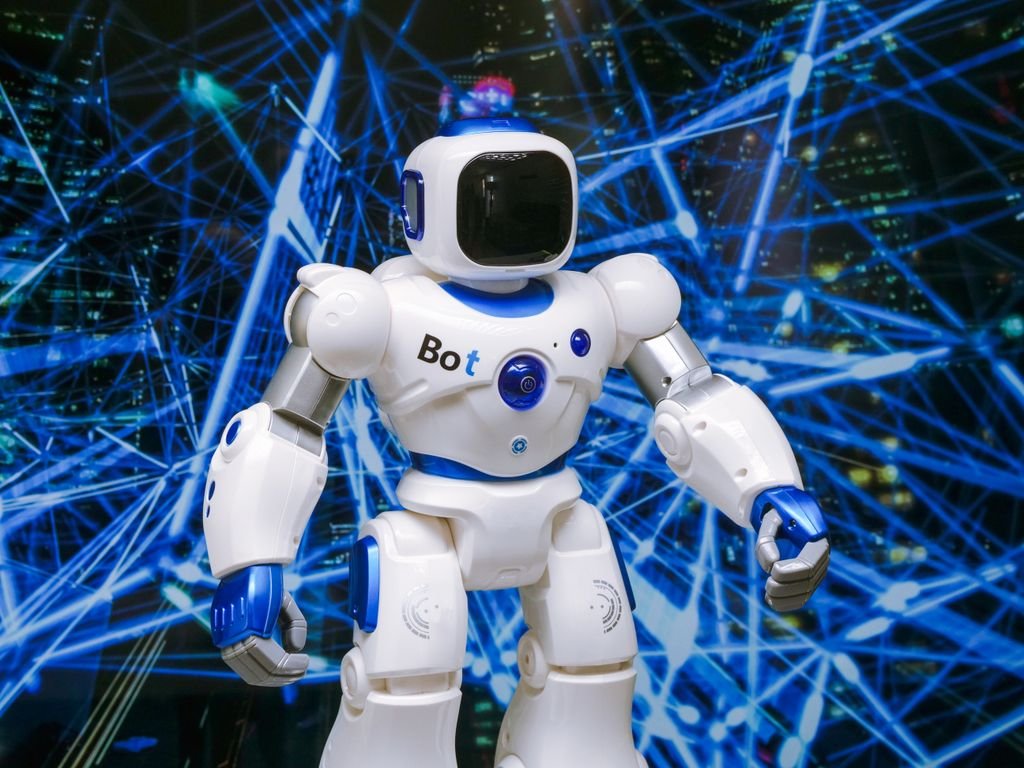
If you have opened LinkedIn, watched a tech keynote, or sat in a team meeting at any point this year, you have probably heard the same phrase again: AI agents. But what are AI agents, and why has this one idea become the biggest talking point in technology in 2026? The short answer is that artificial intelligence has stopped being something you only talk to — and started being something that does work for you.
What Are AI Agents?
An AI agent is a software system, usually powered by a large language model, that can take a goal and work toward it on its own. You give it an objective, such as “sort out all the unpaid invoices and chase the late ones.” The agent breaks that goal into steps, decides which tools to use, carries out those steps, checks the results, and adjusts its plan if something goes wrong. It reports back when the job is done.
That may sound like a chatbot, but the difference is important. A chatbot waits for your question, gives you an answer, and stops. An AI agent keeps going: it can open your calendar, check flight prices, send an email, and come back with a finished result instead of a paragraph of suggestions.
AI Agents vs Chatbots: What Is the Difference?
Think about a travel request. Ask a chatbot to plan a trip and it will give you a nice list of flight options and hotel ideas. Give the same job to an AI agent and it can check your calendar for free dates, compare prices, book the flight, reserve the hotel, and add everything to your calendar — asking you only when a real decision is needed.
Four things make this possible: multi-step reasoning, tool use (it can operate email, calendars, databases, and payment systems), memory of what it did earlier in the task, and human oversight for anything important. When any of these four is missing, what you have is usually just a chatbot with a fancier name.
Why 2026 Became the Year of AI Agents
AI agents are not a brand-new idea, but three things changed in 2026. First, the models got much better: today’s large language models are far more reliable at following multi-step instructions and calling the right tool at the right time.
Second, the plumbing got standardised. New open protocols, such as Anthropic’s Model Context Protocol (MCP) and Google’s Agent2Agent protocol, let AI systems connect to outside tools and data in a standard way. Anthropic’s own engineering guide on building effective agents explains this shift clearly: the model supplies the intelligence, but the software wrapped around it — the tools, memory, and checks — decides what that intelligence can actually do.
Third, companies stopped asking AI for answers and started asking it for finished work. They want a system that can read a customer complaint, check the order history, offer a refund within the rules, and close the ticket. That is a workflow, not a question, and agents are built for workflows. Gartner predicts that 40 percent of enterprise applications will include task-specific AI agents by the end of 2026, up from less than 5 percent in 2025, and the AI agent market is expected to pass $10.9 billion this year.
Where AI Agents Are Actually Working Today
The honest picture is that agents work best in specific, bounded jobs. Customer support is the clearest example: Klarna reported that its AI agents handle two-thirds of customer service conversations, doing work equal to about 700 full-time employees. Banking and insurance lead adoption too, because their work follows clear rules. Coding is another success story: a coding agent can find a bug, fix it, run the tests, and leave a note explaining what changed.
Small businesses are finding uses as well. A small shop can let an agent sort incoming emails, draft replies, update stock records, and chase unpaid invoices. If you want to see how smaller companies are already putting AI to work, read our guide on how artificial intelligence is changing the way small businesses work — many of those same businesses are now moving from simple AI tools to agents that handle whole tasks. And if you are just getting started, our list of 5 free AI tools for small businesses in 2026 is a good place to begin before spending any money. Even a single focused job, like letting AI help you write better emails, shows how the shift from “ask and answer” to “ask and it gets done” is already happening in everyday work.
The Other Side: Hype and Failed Projects
Not everything about AI agents is a success story. Gartner has warned that over 40 percent of agentic AI projects could be canceled by the end of 2027, because of rising costs, unclear business value, and weak risk controls. The same analysts warn about “agent washing” — vendors rebranding ordinary chatbots and old automation tools as agents to ride the hype.
There is also a governance gap: only about 21 percent of companies have a mature way of overseeing autonomous agents, so most organisations deploying them cannot fully explain what happens when one goes wrong. The lesson is simple: an agent is only as good as the limits around it. The companies getting real value start small, pick tasks where a mistake is cheap and easy to spot, and keep a human in the loop for anything important.
What This Means for You
You do not need to be a programmer or a big company to try an AI agent. Pick one repetitive task that needs judgement but has a low cost if something goes wrong: sorting your inbox, drafting routine replies, or summarising long documents. Try it for a week, check the results carefully, and only then give the agent more responsibility.
For workers, the message is not that agents will replace everyone. The people who learn to direct agents — setting clear goals, checking their work, and fixing mistakes — will get far more done than those who do not.
Frequently Asked Questions
Are AI agents the same as chatbots?
No. A chatbot answers questions and stops. An AI agent takes a goal, plans the steps, uses tools to carry them out, and keeps working until the task is done, with a human checking in when needed.
Will AI agents replace jobs?
They will change jobs more than erase them. Agents are good at repetitive work that needs judgement, such as sorting tickets or drafting documents. Work that needs trust, creativity, and real human relationships still needs people — and someone has to supervise the agents.
The Bottom Line
AI agents are everywhere in 2026 because the technology finally caught up with the idea: models got smarter, the connections between systems got standardised, and businesses started asking for finished work instead of just answers. The results in customer support, coding, and banking are real — and so are the failures and the hype. The winners will be the ones that pick the right tasks, set clear limits, and learn to work alongside software that can finally finish a job, not just talk about it.