 How to Spot a Phishing Email in 2026
 How to Protect Your Online Accounts From Hackers
 How to Start an Online Store With No Money
 How Small Businesses Can Use AI for Marketing
 What Is the Metaverse in 2026? Still Relevant?
How to Start Investing With $100 in 2026
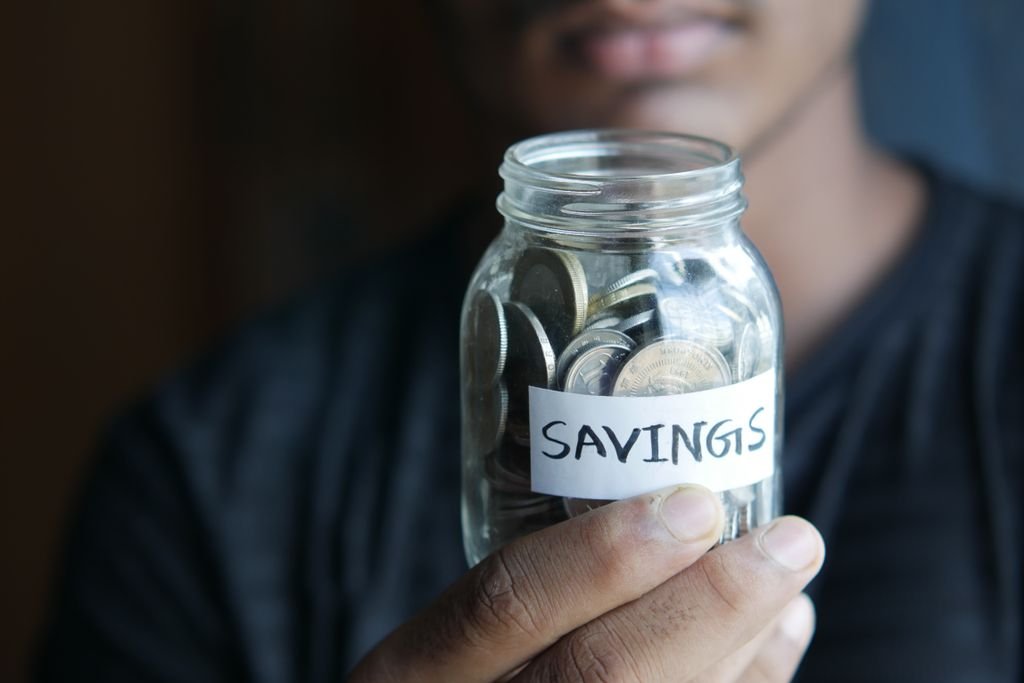
Learning how to start investing with $100 is easier in 2026 than ever. A generation ago, brokers charged high fees and funds demanded thousands just to open an account. Those barriers are mostly gone: most major brokerages now charge zero commission, let you buy fractional shares for as little as $1, and have no account minimum. Your $100 is a real starting point. Here are the steps, in order.
Before You Invest: Two Quick Checks
First, keep a small emergency cushion — at least $500 to $1,000 in an ordinary savings account — for a broken phone or a slow month at work. If every dollar you own is invested, a surprise bill can force you to sell at the worst time, often when prices are down. Invest only money you will not need for several years.
Second, deal with high-interest debt. If you carry credit card debt at 20% interest or more, paying it off beats almost any investment — it is like earning a guaranteed 20% return, and no investment can promise that.
Step 1: Grab the Employer Match First
If your job offers a retirement plan with an employer match, this comes first. Many employers match part of what you put into a 401(k) — for example, 50 cents for every dollar you contribute, up to a limit. That match is free money no investment can beat, so contribute at least enough to get the full match before you open any other account.
Step 2: Choose the Right Account
For most beginners, the best first account is a Roth IRA: you put in after-tax money, and the growth comes out tax-free in retirement. For 2026, the limit is $7,000 a year for most people under 50, so a $100 start uses only a tiny fraction of that room.
If a Roth IRA does not fit — for example, you earn above the income limits — a regular taxable brokerage account works fine too. The account is just the container; what matters is what you buy inside it. Some modern digital banks now combine everyday banking with simple investing tools, and our guide to what a neobank is explains how these app-based banks work.
Step 3: Pick a Broker That Welcomes Small Starters
Opening an account takes about 15 minutes online. Look for three things: no account minimum, zero commission on stocks and ETFs, and fractional shares — the feature that makes $100 investing possible, letting you buy a slice of a fund even when one share costs hundreds of dollars. Avoid any broker charging a monthly fee or a commission per trade: a $5 monthly fee on a $100 account is 5% gone every month before you earn anything.
Step 4: Buy Your First Fund, Not a Hot Stock
Most beginners go wrong here: they spend their $100 on one famous stock they saw on social media. One stock is a gamble. One fund is a whole market.
The simplest first purchase is a broad, low-cost index fund or ETF — one fund holding hundreds of companies, such as one tracking the S&P 500 or the total US stock market. The US Securities and Exchange Commission explains the basics in its investor bulletin on index funds, worth a quick read before you buy.
Check the expense ratio — the yearly fee. Good index funds charge 0.03% to 0.20% a year: on $100, a 0.03% fee costs three cents a year, while a 1% fee costs a dollar — a gap that grows into thousands over decades.
How should you split your $100? Simplest answer: put the whole $100 into one total-market index fund. One purchase, hundreds of companies, done. For more balance, try $70 in a US fund, $20 in an international fund, and $10 in a bond fund.
Funding the account is usually as simple as topping up a digital wallet — most brokers accept a bank transfer or debit card, and the money arrives in one or two days.
Step 5: Automate $25 to $100 Every Month
Your first $100 matters, but your second, third, and fiftieth matter far more. Set up an automatic transfer into your brokerage on payday — even $25 a month counts. This is dollar-cost averaging: the same amount on a schedule, buying more shares when prices are low and fewer when they are high.
The numbers show why the habit beats the starting amount. Invest $100 a month at 7% a year, and after 10 years your $12,000 of deposits could grow to roughly $17,300; after 30 years, $36,000 of your own money could grow to about $122,000. These are illustrations, not guarantees, but they show why starting early matters more than starting big. For more ideas, the Motley Fool’s guide to investing $100 is a useful second opinion.
What NOT to Do With Your $100
Do not spend your first $100 on options trading, meme stocks, or a “get rich quick” course — options can wipe out your whole balance in a day. Putting your first $100 into crypto is very different from buying a broad index fund: crypto prices can swing 10% in a single day, as our beginner’s guide to crypto wallets explains, so it is a side bet, not a starting point. Ignore anyone who promises guaranteed returns.
What to Do When the Market Drops
Sooner or later your investment will fall: your $100 might become $85. This is normal — a drop means your next automatic deposit buys more shares than it did last month. If your money is in a broad index fund and you do not need it for years, a falling market is not a reason to sell. The investors who lose money are usually the ones who panic-sell during a drop and buy back after prices recover.
Your First-Week Checklist
Here is the part most guides skip: Day 1: check your emergency cushion and debt. Day 2: ask your employer about a 401(k) match. Day 3: open a Roth IRA or brokerage account with no minimum and fractional shares. Day 4: transfer your $100 in. Day 5: buy one broad index fund with a fee under 0.20%. Day 6: set up an automatic deposit, even $25. Day 7: close the app — checking your balance daily is the fastest way to make emotional decisions.
The Bottom Line
You do not need thousands of dollars to become an investor. You need $100, one good account, one low-cost fund, and a monthly habit. What matters is that you started.
This article is general educational information, not personal financial advice. Investing involves risk, including losing money.
FAQ
Is $100 really enough to start investing?
Yes. With fractional shares and zero-commission brokers, you can buy a slice of a broad index fund for as little as $1 — the habit of adding to it matters far more than the amount.
What is the safest way to invest $100 as a beginner?
Most beginners start with a broad, low-cost index fund or ETF, such as one tracking the S&P 500 or the total US stock market. It spreads your money across hundreds of companies, so one bad company cannot sink your investment.