Inclusive Humor: How to Be Funny Without Being Offensive
What Is Inclusive Humor?
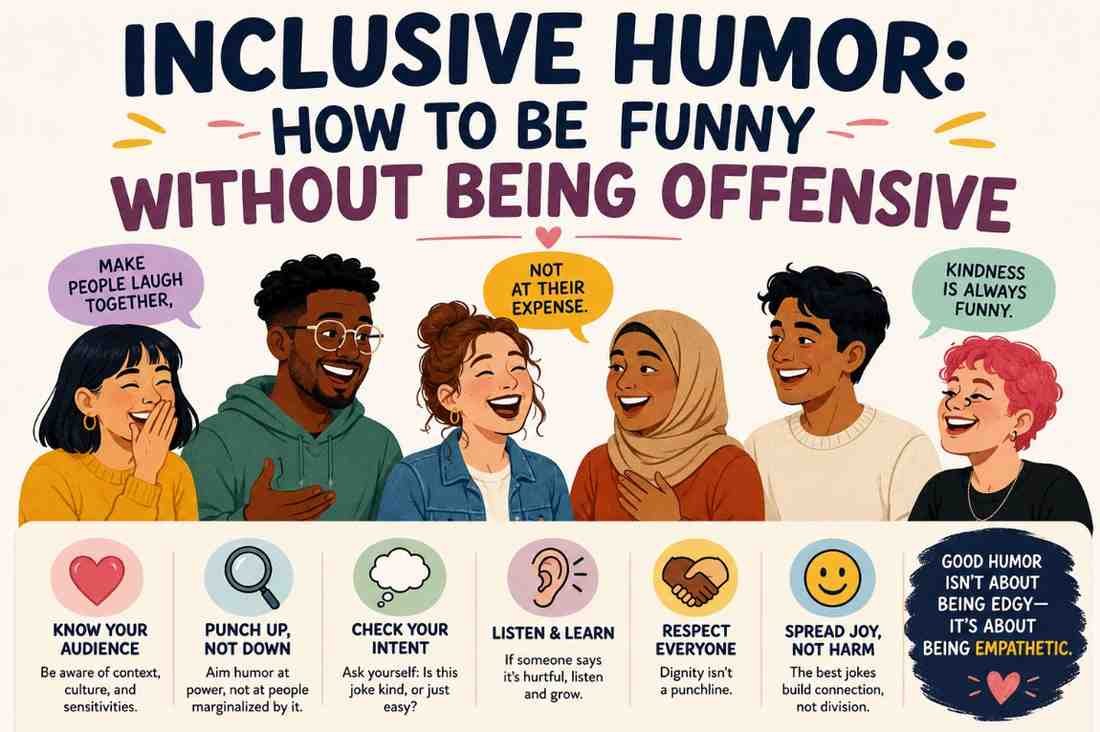
Inclusive humor is exactly what it sounds like—it brings people together instead of pushing them apart. Think of it like a party where everyone is invited, and no one feels awkward or targeted. Unlike offensive or sexist jokes, inclusive humor avoids mocking a specific group and instead focuses on shared human experiences that everyone can relate to. It’s about making people laugh with you, not at someone else.
Humor has always been a powerful tool in human communication. From ancient storytelling to modern stand-up comedy, people use jokes to break tension, build connections, and even challenge ideas. But here’s the catch—what we find funny has evolved. Audiences today are more aware, more diverse, and more conscious of the impact words can have. That’s why inclusive humor is not just a “nice option” anymore—it’s becoming the standard.
When you use inclusive humor, you’re not limiting creativity—you’re actually expanding it. You’re forced to think smarter, write better, and connect deeper. And honestly, isn’t that what great humor is all about?
The Problem With Offensive and Sexist Jokes
Let’s be real for a moment—offensive jokes might get a quick laugh in certain circles, but they often leave a negative impact behind. Jokes that target women or any group can reinforce harmful stereotypes and create discomfort. Imagine laughing at something, only to realize later that it hurt someone—that’s not a great feeling, right?
The social impact of harmful humor goes beyond just one joke. It shapes how people think and behave. Repeated exposure to stereotypes can normalize them, making it harder for society to move forward. That’s why many comedians and content creators are shifting their approach. They’re realizing that humor doesn’t need to be harmful to be hilarious.
Audiences today are also more vocal. Social media has given people a platform to call out content that feels offensive. This doesn’t mean humor is “dying”—it means it’s evolving. And honestly, that’s a good thing. It pushes creators to be more creative and thoughtful.
Psychology Behind Humor
Ever wondered why we laugh? It’s not just random. Laughter is actually a psychological response to surprise, relief, or recognition. When a joke catches us off guard or connects with something familiar, our brain rewards us with laughter. It’s like a mini celebration in your mind.
There are different types of humor styles, and understanding them can help you create better jokes:
- Affiliative Humor—Brings people together
- Self-Enhancing Humor – Helps cope with stress
- Self-Deprecating Humor—Laughing at yourself
- Aggressive Humor – Targets others (often offensive)
Inclusive humor mostly falls into the first three categories. It builds connections instead of breaking them. Think about it—when someone tells a joke about everyday struggles, like forgetting passwords or waking up late, everyone laughs because they’ve been there.
What Makes a Joke Truly Funny?
A joke isn’t just about words—it’s about timing, delivery, and relatability. You could have the funniest line in the world, but if it’s delivered at the wrong moment, it falls flat. Timing is everything in comedy. It’s like cooking—you need the right ingredients at the right time.
Relatability is another huge factor. People laugh at things they recognize. That’s why jokes about daily life, work stress, or family situations often work so well. They tap into shared experiences.
Here’s a simple truth: the more people who can relate to your joke, the funnier it becomes. And inclusive humor naturally does this because it avoids excluding anyone.
Clean Humor vs Offensive Humor
Let’s break this down clearly:
| Aspect | Clean Humor | Offensive Humor |
|---|---|---|
| Audience | Everyone | Limited |
| Impact | Positive | Can be harmful |
| Longevity | Timeless | Often short-lived |
| Creativity | Requires skill | Often relies on shock value |
Clean humor doesn’t mean boring humor. In fact, it often requires more creativity because you can’t rely on cheap shots or stereotypes. It challenges you to think outside the box.
Examples of clean comedy include observational humor, wordplay, and situational jokes. These styles are not only safe but also widely appreciated.
How to Create Inclusive Jokes
Creating inclusive humor is easier than you might think. The key is to shift your focus. Instead of targeting people, focus on situations. Life itself is full of funny moments—you just need to notice them.
For example, think about the struggle of trying to find your phone while holding it in your hand. That’s universal. Everyone has experienced it, and no one feels targeted.
Self-deprecating humor can also work well if used carefully. Laughing at your own mistakes can make you more relatable, but it should never turn into self-harm or negativity. Keep it light and playful.
Popular Types of Safe and Funny Jokes
Everyday life is a goldmine for humor. From awkward conversations to funny misunderstandings, there’s no shortage of material. Work and school humor are especially relatable because almost everyone has experienced those environments.
Think about moments like
- Sending a message to the wrong person
- Joining a meeting late and pretending your mic was broken
- Studying for hours and still forgetting everything
These situations are funny because they’re real. They don’t need to target anyone to get a laugh.
Benefits of Positive Humor
Positive humor does more than just make people laugh—it actually improves mental health. Laughter reduces stress, boosts mood, and even strengthens the immune system. It’s like a natural therapy session.
Socially, humor helps build connections. When people laugh together, they feel closer. It breaks barriers and creates a sense of belonging. Inclusive humor enhances this effect because no one feels left out.
In professional settings, humor can improve teamwork and communication. A light joke during a stressful moment can completely change the atmosphere.
Common Mistakes to Avoid
One of the biggest mistakes in humor is relying on stereotypes. It might seem easy, but it often comes across as lazy and outdated. People want fresh, original content—not recycled jokes.
Another mistake is “punching down,” which means making fun of people in a weaker position. This type of humor is not only offensive but also less impressive. Great comedians “punch up” or focus on shared experiences instead.
Conclusion
Humor is one of the most powerful tools we have—it can connect, heal, and entertain. But with that power comes responsibility. Inclusive humor proves that you don’t need to offend anyone to be funny. In fact, the best jokes are the ones that bring people together.
By focusing on relatable experiences, smart observations, and creative storytelling, you can create humor that everyone enjoys. And honestly, isn’t it better to make a room full of people laugh together than to divide them?
FAQs
1. What is inclusive humor?
Inclusive humor is a style of comedy that avoids targeting specific groups and focuses on shared human experiences.
2. Can clean humor still be funny?
Yes, clean humor can be just as funny—sometimes even funnier—because it relies on creativity and relatability.
3. Why are sexist jokes considered harmful?
They reinforce stereotypes and can make people feel uncomfortable or disrespected.
4. How can I make my jokes more inclusive?
Focus on situations, avoid stereotypes, and aim for humor that everyone can relate to.
5. Is offensive humor completely banned in comedy?
Not entirely, but audiences today prefer thoughtful and respectful humor that doesn’t harm others.


Планируя пройти похудение под наблюдением врача в москве, важно проконсультироваться с специалистом, чтобы обезопасить своё здоровье и добиться наилучших результатов.
Процедура голодания требует профессионального контроля для безопасного проведения.
Медицинский контроль в этот период помогает избежать осложнений и определить индивидуальные ограничения.
При правильном подходе голодание может принести значительную пользу для организма.
Регулярная проверка помогает определить необходимость продолжения или прекращения голодания.
Это особенно актуально для людей с хроническими заболеваниями или ослабленным иммунитетом.
Самостоятельное проведение таких процедур без медицинской поддержки не рекомендуется.
Наблюдение специалиста помогает определить оптимальную продолжительность и интенсивность голодания.
Контроль врача включает регулярные проверки и мониторинг основных показателей организма.
Психологическая поддержка врача также играет важную роль в успешности голодания.
Профессиональный контроль делает процесс более управляемым и предсказуемым.
Важно помнить, что самостоятельное выполнение таких процедур может привести к нежелательным последствиям.
Поэтому не стоит игнорировать консультацию врача при планировании подобной процедуры.