Solar Eclipse: All About the Different Types, What Causes Them, and Some Amazing Information (2026)
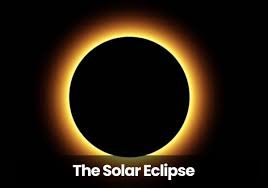
From Earth, a sun eclipse is one of the most beautiful things you can see in the sky. This occurs as the lunar orbit shifts in front of the heavenly body and blocks some or all of the sunshine. When there is a total lunar eclipse, the sky looks stunning as sunlight quickly fades into nightfall. Academics, observers of the skies, and shooters from all over Europe are interested in this ecological event.
A solar eclipse of the sun happens when the sun, Moon, and Earth are all lined up perfectly. Because the Moon’s path is tilted, this very rare cosmic alignment is not achieved on a monthly basis. We can learn about further space research, how planets move, and how the sky works by studying eclipses of the sun.
What makes a solar eclipse happen?
While the Sun, the lunar surface, and the planet itself are all lined up in a circle, there is a solar eclipse. In the field of science, this pattern is called syzygy. The Moon leaves an outline on Terra as it moves in front of the Sun.
The Moon’s silhouette is mostly made up of two distinct elements:
- Umbra: The darkest spot where you can see a total eclipse
- It’s the lighter shade that you can see when there is only a partial eclipse.
Despite the fact that the Moon goes towards Earth every thirty days, there aren’t always partial eclipses for the reason this planet’s path revolves about 5 degrees from the Moon’s. This tilt stops shadows from aligning normally.
Different Kinds of Solar Eclipses
An eclipse of the sun can be one of four primary kinds. Each type changes based on where the globe or Mercury is.
1. A total eclipse of the sun
When the moon fully blocks sunlight, this is called an all-out lunar eclipse. For a short time, residents waiting in the umbel are completely dark. The top layers of the Sun, known as the corona, can be seen.
2. A partial eclipse of the sun
A solar eclipse that partially blocks out only one region of the sun. A sickle form is made when the full moon uncovers an area within the sun’s disk.
3. Solar Eclipse with a Ring
When the lunar surface is further from the planet and looks lighter, there is an annular solar eclipse. There is a dazzling “circle of fire” encompassing the sun that it doesn’t entirely reach.
4. A Mixed Solar Event
It’s not often that there is an integrated sun and an eclipse. Irrespective of where on Earth somebody is watching, it changes from a complete solar eclipse to a partial moon.
The path of totality during a solar eclipse
There is a small spot on Earth called the location of transparency where viewers can see an annular eclipse of the sun. The solar atmosphere and total obscurity can only be seen through those who are on this road. People who are not on this line can see a partial eclipse.
The path goes about west to east for the reason that the planet Earth spins. The width of it is generally within 100 and 200 acres, which means that only a small area can be seen. This is the main reason why people schedule visits to certain territories to see full sun exposure.
How Often Does a Solar Eclipse Take Place?
About a couple of times a year, there is a solar blackout. Full sun absences in a single place, on the other hand, occur roughly each 300 to 400 years.
It matters to know the difference between a solar eclipse and a lunar eclipse. Whenever the planet moves across the Sun alongside the surface of the Moon, there is a lunar eclipse that occurs. Both of them are interesting astrological things, but watching them safely and seeing them clearly are not the same.
What the solar eclipse means in history and culture
Myths and folklore had been around eclipses for a very long time. People in the past often saw it as a sign of alteration or a word from God.
But in current science, solar eclipses are used to study things. A complete impact is a time for researchers to research the Moon’s corona and eruptions from the sun, alongside its magnetic fields. We learn more about the sun’s power, spaceflight temperatures, and space-based connectivity thanks to these works.
Tips to Keep You Safe While Watching a Solar Eclipse
If you cannot safeguard your eyes, observing a sun impact can hurt them forever. If you looked straight at the horizon, you might burn the layers of your retina.
Here are some safe ways to watch:
- Use eclipse glasses that are ISO-approved.
- Solar sight filters should be used on binoculars.
- Watch a live broadcast of events
- Do it with a keyhole reflector.
Protect yourself, never with spectacles, CDs, or normal plexiglass.
Interesting Facts About Eclipses
- It only takes a few moments for a total sun eclipse to happen.
- When it gets dark quickly, animals may act in unusual ways.
- During totality, the mercury can drop by a lot.
- A total sun eclipse can last up to 7.5 minutes at its longest.
- NASA looks at every big eclipse on Earth to learn more about the sun.
What Scientists Need to Know About Solar Eclipses
Scientists can look at the Sun’s surface stratosphere during an eclipse, which is regularly covered by intense daylight. Investigators gather information about pollution and wind gusts at this precise moment.
Interstellar institutions, such as NASA, use sightings of eclipses to make their methods for protecting satellites better. Knowing about solar eclipses additionally lets you guess when earthquakes will happen, which can mess up electric lines and telephone lines.
Conclusion
When there is a total lunar eclipse, it’s easy to remember how exactly our solar system operates. In one rare point, this organic occasion brings together technology, elegance, and interest. Every single total eclipse teaches us concerning how the sun works and how the stars move, from complete silence to the bright corona. Researchers and sky lovers all over the globe. are still amazed by solar eclipse, whether they are seen for study purposes or just for fun. Being able to safely see a solar eclipse may appear to be an unforgettable trip that makes us feel very connected to the world.
(FAQs)
1. In simple terms, what is a sunny eclipse?
When the Moon stops the sun from affecting this planet, this is called a solar eclipse.
2. Is it secure to see a solar eclipse?
It’s only safe to look at with the right sun lenses or coverings.
3. How long does an entire solar eclipse last?
Most of the time, a totality takes 2 and 7 minutes.
4. Why isn’t there a solar eclipse on a monthly basis?
Since the Moon’s path around is a little angled.
5. Will the eclipse be the same for everyone?
No, your sight requires knowing where you are.